
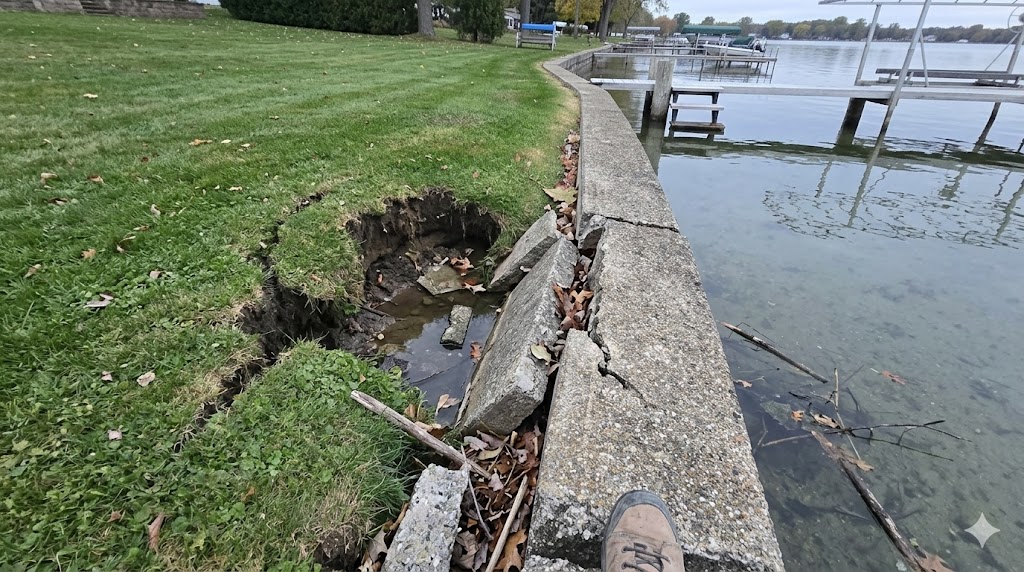
Sink Holes Behind Seawalls
Sinkholes in the Yard? Why That Hole by Your Wall Means a “Leak” Underneath
If you’re a West Michigan cottage owner living on the water, you know the feeling of a perfect Saturday morning—coffee in hand, looking out at the lake. But then you see it: a small, unassuming depression in the grass about three feet behind your seawall. You fill it with a bag of topsoil, but a month later, it’s back, and it’s bigger.
In the marine construction world, we call these “indicators.” And in West Michigan, where our sandy soils are incredibly mobile, a sinkhole isn’t just a tripping hazard—it’s a warning sign that your shoreline protection is “leaking” underneath.
The Silent Culprit: Hydrostatic Pressure
Whether you have a concrete seawall or a steel piling system, the enemy is the same: water pressure. When it rains in Grand Haven or Muskegon, the water soaks into your yard. That water wants to get to the lake. If your wall doesn’t have a functional drainage system (weep holes), that trapped water builds up immense pressure.
Eventually, that water finds the path of least resistance. It forces its way through a seam in your concrete seawall panels or under the “toe” of the wall. As the water escapes, it takes your backyard with it, one grain of sand at a time.
Why Concrete Seawalls Are Vulnerable
Many older cottages on Michigan’s inland lakes feature traditional concrete seawalls. While concrete is incredibly strong, it is also rigid. Over decades, the freeze-thaw cycles of a Michigan winter can cause:
-
Panel Separation: The joints between concrete sections can open up just enough for sand to migrate through.
- Undermining: Concrete seawall are usually poured on top of the lake bed. Over time, water finds it’s way underneath.
-
Cracking: Small structural cracks become “highways” for soil erosion.
-
Tie-Back Failure: If the anchors holding your wall back snap, the wall “kicks out” at the bottom, creating a massive gap for soil to vanish into the lake.
The Reality Check: Why Patching Isn’t a Fix
When sinkholes appear, many homeowners attempt a “quick fix” by pumping polyurethane foam or cement slurry into the voids. While this might stop the sinkhole for a season, it’s often just masking a terminal illness.
Once a concrete seawall begins to separate or bow, the structural integrity is compromised. In West Michigan, our lakes don’t just sit still; they have “ice shove” and heavy seasonal surges. A patched wall is brittle. It can’t flex with the ice, and the next big freeze will likely pop those patches right back out, leaving you with the same expensive problem—and less yard than you started with.
The Long-Term Solution: Full Replacement
If you’re chasing sinkholes year after year, it’s time to face the truth: Replacement is the only permanent solution. Modern marine engineering has come a long way since those old concrete slabs were poured.
By replacing a failing concrete wall with a modern Vinyl or Truline Hybrid seawall, you gain:
-
Interlocking Seams: Unlike concrete panels that sit side-by-side, vinyl sheets lock together, creating a watertight seal that sand simply cannot move through.
-
Flexibility: Modern materials can handle the expansion and contraction of Michigan winters without cracking.
-
50+ Year Lifespan: You stop paying for “maintenance” and start enjoying your property again.
Don’t Wait for the Collapse
A small sinkhole today can lead to a total seawall failure tomorrow. If you’re noticing “missing” dirt behind your wall, it’s time for a professional evaluation. At Waterside Renovations, we’ve spent years replacing failed shorelines across South West Michigan. We know the local soil, we know the EGLE regulations, and we know how to secure your property for the next half-century.
Are you tired of filling holes in your yard? Contact us today for a Shoreline Health Assessment.
269-588-9681
www.watersiderenovations.com